
Letter sounds or letter names: which comes first?
The sound is what a child reads with. But the research on names is not one-sided, and the answer at home is simpler than the argument.
Usman Mughal · Founder & CEO, Mobizio
Updated
The honest answer is that there is no single right age, and anyone who gives you one is selling something.
What there is, is an order. Some things reliably come before others, and starting on letters before the earlier pieces are in place tends to make everything slower rather than faster. So the more useful question is not when but what comes first.
Long before a child can name a letter, they are doing the work that makes letters possible:
If those are happening, the groundwork is already being laid, even on a day when nobody looks at a single letter.
Treat these as loose and overlapping. The range of normal is very wide, and children move back and forth rather than climbing steps.
The ages follow the shape of the CDC's Learn the Signs. Act Early. milestones and the NHS's early talking guidance. Neither of those is a letters timetable, because there is no such thing. Both describe the language and hand control that letters sit on top of, which is the part actually worth tracking.
| Roughly | What usually shows up |
|---|---|
| Two to three | Noticing that print exists. The first letter of their own name |
| Three to four | A handful of letters, often from their name. Letter shapes as pictures |
| Four to five | Letters starting to connect to sounds. More controlled tracing |
| Five to six | Blending short words. Recognisable writing, often reversed |
Around two to three. Most children start to notice that print exists. They spot the first letter of their own name on a sign. That first letter is usually the one that matters most. It is theirs, and that is why it sticks.
Around three to four. Recognising a handful of letters, often from their name. Enjoying letter shapes as pictures rather than as sounds. Scribbling that starts to look deliberate.
Around four to five. Connecting letters to sounds. Starting to hear that sun begins with a ssss. Tracing shapes with more control.
Around five to six. Blending sounds into short words. Writing letters that are recognisable, though not neat, and often reversed. Reversals at this age are ordinary and usually sort themselves out.
If your child is not where a paragraph above suggests, that is not a verdict. Children who arrive later at this often catch up completely.
That last paragraph is true, and on its own it is not enough, because "wait and see" should have an edge to it somewhere.
Reversing letters is ordinary at five and six, and most children who do it before about seven do not turn out to be dyslexic. The point where it is worth asking is when reversals or letter confusion are still frequent past about seven, or are still there in grade three. That is a conversation with the teacher, not a panic, and it is the kind of thing that gets easier the earlier it is raised.
The same applies in the other direction. If your child's nursery or school brings a concern to you, take it as information rather than a verdict. They see a lot of four-year-olds, which is exactly the comparison no parent has.
Nothing here is a diagnosis and none of it is medical advice. If something is nagging at you, your GP or health visitor is the right first stop, and the NHS page on dyslexia explains what an assessment actually involves.
Better signs than age:
And the clearest sign of all: they come back to it on their own. Interest that has to be manufactured every single time is usually a sign to wait a few weeks and try again.
Three things get in the way more than a late start ever does.
Making it a test. "What letter is this?" asked four times in a row turns a game into an exam. Children opt out of exams.
Pushing writing too early. Forming letters needs hand strength and control that arrives on its own schedule. Threading beads, play dough and scissors do more for handwriting at three than a pencil does.
Comparing. A child who reads at four and a child who reads at six often land in the same place by eight. The early one is not smarter. They are earlier.
Once letters are genuinely underway, the next question arrives immediately, and it is the one that trips up most parents: do you teach the sound a letter makes, or its name?
The short version is that the sound is what a child reads with, and the way most of us pronounce consonants quietly breaks blending. That has its own piece: letter sounds or letter names, which comes first.
An app is good at the repetitive part: the same letter shape, traced again, without anyone getting bored of asking. It is genuinely useful for that, and it means a child can practise while you are cooking dinner.
It is not good at the part that matters most. It cannot notice that your child is tired today, or that they only want the letters in their own name this week, or read them the same book for the fifth night running.
Use it for the drill. Keep the talking, the rhymes and the bedtime story for yourself. That is the half doing the heavy lifting.
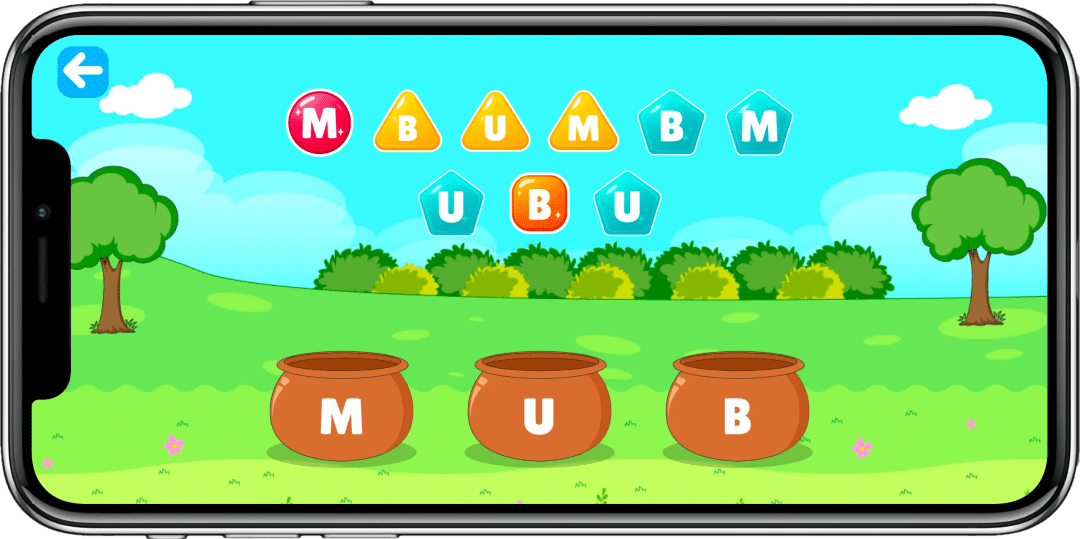
If you want a look at how the practice side works, the activity categories show what is covered at each stage: tracing, letter sounds and first words. And if you are weighing up apps in general, the six things we would check is the list we hold ourselves to.


Milestone checklists by age, and what to do if something is missing.
The talking and listening that comes before any letter.
Rhyme and sound awareness, and why it predicts early reading.
The age past which persistent reversals are worth raising with a teacher.
Signs by age and what an assessment involves.
Founder & CEO, Mobizio
Usman is the founder and CEO of Mobizio, and has shipped Preschool Kids Academy since 2018. He writes from that: what small children actually do with the app, and the questions parents send in. Where an answer is a matter of evidence rather than experience, the source is linked rather than asserted.
This is one of 4 guides in Talking, letters and first writing, in the order a child meets them.
The sound is what a child reads with. But the research on names is not one-sided, and the answer at home is simpler than the argument.
Six things to check before an app goes on the device, what the WHO and AAP actually recommend, and three worries you can safely drop.
Published by Mobizio Studio. Every child is different, and nothing here is medical or developmental advice.