How to teach shapes to a preschooler
Shapes are a looking skill before they are a naming one. What to do first, the order that helps, and why it matters for reading later.
Usman Mughal · Founder & CEO, Mobizio
Most children can chant to ten long before they can count ten things.
Those are not the same skill, and almost all the frustration around early maths lives in the gap between them.
Reciting one, two, three, four is a song. It is a good thing to know, and it is learned the way any rhyme is learned.
Counting is three separate jobs happening at once:
A child can be perfect at the first and nowhere near the third. Ask how many after they have counted four cars correctly, and a three-year-old will often count them again. That is not a mistake. It is the third job not having arrived yet.
The Department for Education's early years guidance describes this as counting with one-to-one correspondence, and it is the thing worth watching for rather than the size of the number.
It is the same one-at-a-time noticing that shape sorting is built on, which is why the two so often arrive in the same few months.
The single most useful thing you can do is move their finger.
Count slowly, touch each object as you say its number, and let them do the touching once they can. Objects that stay still help, so a row of buttons beats a pile of them. If they lose track, line the objects up.
Numbers past ten can wait. A child who counts five things properly is further ahead than one who chants to twenty and points at random.

That last one does more than it looks. Being the one who knows is a strong feeling at four.
The written digit is a separate thing again. Three the word, three the quantity, and 3 the squiggle are three pieces of knowledge, and the squiggle is the least urgent of them.
Plenty of children learn to write 3 before they reliably count three things. That is fine, and it is worth knowing it proves less than it appears to.
The hand that draws the squiggle runs on its own timetable, and it is the same one letters wait for. When to start letter tracing covers the grip and control that have to come first.
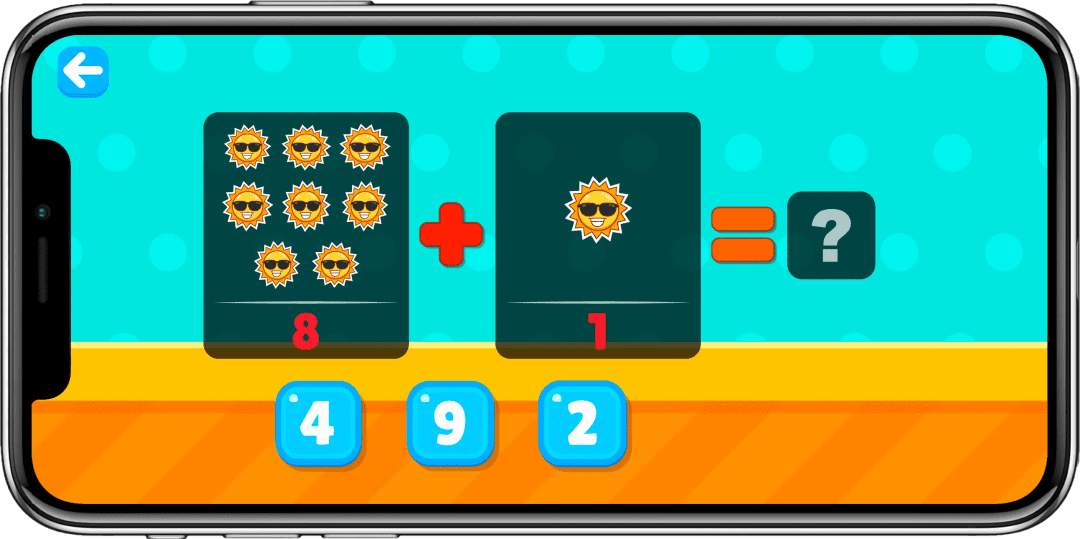
Counting practice is repetitive, and repetition is the part a screen does not mind. It also says the number the same way every time, which is harder for a tired adult at the end of a long day.
What it cannot do is put a real grape in their hand and take it away again. Quantity is learned with objects, and a screen has no objects in it.
Use it for the drill and the number names. Keep the stairs, the table and the grapes for yourself.
Our numbers activities cover tracing the ten numerals, counting, and first addition, all read aloud.


One-to-one correspondence, cardinality, and what to do about each.
Milestone checklists by age, including early counting.
The talking that number words sit on top of.
Founder & CEO, Mobizio
Usman is the founder and CEO of Mobizio, and has shipped Preschool Kids Academy since 2018. He writes from that: what small children actually do with the app, and the questions parents send in. Where an answer is a matter of evidence rather than experience, the source is linked rather than asserted.
This is one of 5 guides in Shapes, colours and counting, in the order a child meets them.
Shapes are a looking skill before they are a naming one. What to do first, the order that helps, and why it matters for reading later.
There is no single right age. What comes first, how to tell they are ready, and the point at which a delay is worth raising with a teacher.
Published by Mobizio Studio. Every child is different, and nothing here is medical or developmental advice.