
When should my child start learning letters?
There is no single right age. What comes first, how to tell they are ready, and the point at which a delay is worth raising with a teacher.
Usman Mughal · Founder & CEO, Mobizio
The pencil is the last thing to arrive, not the first.
That is the whole answer, and it is worth a few hundred words because almost every worry about handwriting comes from starting at the wrong end.
Forming a letter needs a hand that can already do a lot: grip, control, crossing the middle of the body, and enough strength to hold a position without shaking.
None of that is built by writing. It is built by:
The Department for Education puts all of this under physical development, and lists it before writing rather than beside it. Threading beads at three does more for handwriting than a pencil does.
Tracing is useful once a child is already interested in letter shapes and can make a controlled mark. Roughly four to five for most children, but interest is a better signal than age.
Signs it is worth trying:
If those are not there yet, tracing turns into a chore for both of you and teaches nothing. Come back in a few weeks.
Their own name first. Those letters matter emotionally, and emotional interest beats a tidy sequence every time.
Lower case, not just capitals. Many children meet capitals first because signs and name labels use them. Books are lower case, so that is where the practice is needed.
Big before small. A letter drawn the size of a plate is easier than one drawn between two lines. Shrink it later.
One letter at a time, and keep the confusable pairs apart. Teach b weeks before d, and the confusion mostly never forms.
That pair is one circle and one stick with the stick on different sides, which makes it a looking problem before it is a writing one. How to teach shapes to a preschooler is where that noticing gets built.
Reversed letters. Ordinary at five and six. Most children who reverse letters before about seven do not turn out to be dyslexic. If it is still frequent past seven, or continues into grade three, raise it with the teacher.
The longer version of that threshold, and what belongs before letters at all, is in when should my child start learning letters.
Grip, mostly. A tripod grip is the goal, not the starting point. Short pencils and broken crayons encourage it better than being corrected does, because a stub cannot be held in a fist.
Neatness. Recognisable beats neat at this age. Neat comes with mileage.
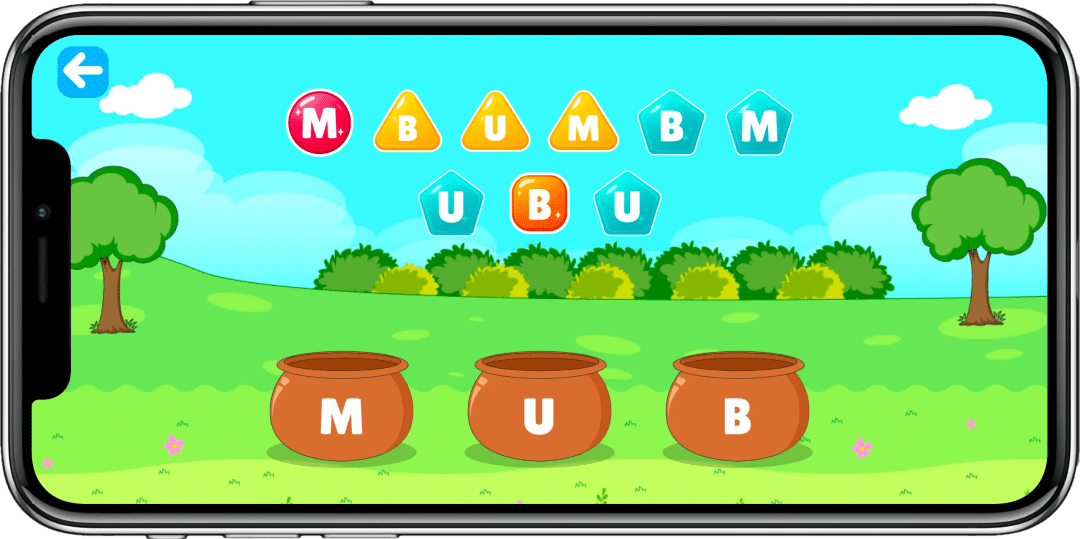
A screen is good at the repetitive half. It will show the same stroke order the same way on the twentieth go without sighing, and it never runs out of paper.
But there is something it genuinely cannot do, and it is worth being straight about it: tracing with a finger on glass does not build hand strength. There is no resistance, no grip, and no tool to control. It teaches the shape and the stroke order, which is real, and it does nothing for the muscles that have to hold a pencil.
So a tracing app is a supplement to dough, scissors and crayons. It is not a substitute for them, and any app that tells you otherwise is selling something.
Our alphabet activities cover all twenty-six letters as guided traces, read aloud. Keep the scissors out too.


Fine motor control, and why it comes before writing.
When reversed letters are ordinary, and when to ask.
Where letter formation sits alongside reading.
Milestone checklists by age, including drawing and copying.
Founder & CEO, Mobizio
Usman is the founder and CEO of Mobizio, and has shipped Preschool Kids Academy since 2018. He writes from that: what small children actually do with the app, and the questions parents send in. Where an answer is a matter of evidence rather than experience, the source is linked rather than asserted.
This is one of 4 guides in Talking, letters and first writing, in the order a child meets them.
There is no single right age. What comes first, how to tell they are ready, and the point at which a delay is worth raising with a teacher.
The sound is what a child reads with. But the research on names is not one-sided, and the answer at home is simpler than the argument.
Published by Mobizio Studio. Every child is different, and nothing here is medical or developmental advice.